

Get 10% off at Keratin.pro! Enter the promo code GLASS2026 at checkout! P.S. The promo code is valid for all products except those already discounted.
Contents
What does the term glass hair actually mean?
Is glassiness a sign of healthy hair?
Glass-like shine without weighing the hair down: is it possible?
Is it necessary to completely avoid silicones?
How can you achieve the glass hair effect without compromising volume?
Glass hair after salon procedures: what happens?
How can you tell that your hair care routine is weighing your hair down?
Smooth, shiny hair that reflects light almost like a mirror surface has long been one of the most popular beauty trends. This effect is often called glass hair. The strands look extremely even, dense, shiny, and almost polished.
But does this appearance mean that the hair is truly healthy? Not exactly. Glassiness is primarily a characteristic of the surface of the hair fiber and its ability to reflect light evenly. It can result from a good condition of the cuticle, proper cosmetic care, or temporary styling. Therefore, it is important to distinguish between the structural condition of the hair and the cosmetic effect of glass-like shine.
What does the term glass hair actually mean?
The hair shaft consists primarily of keratin structures, while its outer part is formed by the cuticle — a system of scales layered over one another. It is the condition of the surface that largely determines how the hair reflects light, how smooth it feels to the touch, and how easily it can be combed.
When the cuticle scales lie relatively flat, the surface of the hair becomes more uniform. Light is reflected from it in a more directed manner, which makes the strands appear significantly shinier. If the surface is uneven, damaged, or rough, light is scattered in different directions, and the hair looks dull.
For this reason, the glass effect cannot automatically be considered a separate hair type or a medical diagnosis. It is rather a visual characteristic that can occur under different conditions.
Is glassiness a sign of healthy hair?
Not necessarily. Visually very shiny hair may indeed have a well-conditioned, smooth cuticle, but shine itself is not a sufficient indicator of the strength of the hair fiber.
Cosmetic products can temporarily change the properties of the hair surface: reduce friction, smooth the cuticle, improve combability, and enhance light reflection. This does not mean that damaged areas of the hair have biologically recovered. Hair after emerging from the skin is a non-living fiber, so cosmetic conditioning works primarily through the physicochemical interaction of ingredients with its surface and, to some extent, its internal areas. Therefore, it is more appropriate to assess hair not by a single parameter — shine — but by a combination of characteristics. It is worth paying attention to the following signs:
- evenness and smoothness of the surface;
- ease of combing without excessive tension;
- tendency to breakage and split ends;
- fiber elasticity;
- response to moisture and cosmetic procedures;
- ability to maintain volume and not lose freshness too quickly.
A comprehensive assessment helps determine whether we are dealing with truly well-conditioned hair or merely a short-term polishing effect. Excessive shine alone does not indicate the absence of damage.
Why does hair become shiny?
The condition of the cuticle affects shine, but it is not the only factor. It is also important how evenly cosmetic ingredients are distributed over the surface of the hair.
Conditioning substances reduce friction between individual fibers, make combing easier, and help make the surface smoother. Such ingredients include cationic conditioners, polymers, oils, hydrolyzed proteins, and silicones. They work in different ways, and the result depends on the hair type, the condition of the cuticle, and the specific composition of the product.
If silicones are used in hair products, the harm of such substances lies only in the fact that they may accumulate on the strands. These substances can provide benefits, namely forming a thin film on the hair fiber, reducing friction, and enhancing shine. Therefore, they are often used specifically to achieve a smooth, shiny, and well-groomed appearance. At the same time, different silicones have different abilities to deposit on the hair and be washed out, so their behavior in cosmetic formulations is not the same.
Glass-like shine without weighing the hair down: is it possible?
Yes, and this is especially important for fine, soft, or volume-prone hair. The desire to achieve an extremely smooth surface should not turn into layering a large number of masks, oils, serums, and heavy leave-in products.
If an excessive amount of film-forming ingredients accumulates on the hair, the strands may lose their lightness, appear unclean sooner, and hold root volume less effectively. Some water-insoluble silicones are characterized by accumulation under certain conditions, so what matters is not categorical avoidance of silicones, but the right balance and matching the care routine to the needs of the hair. For lightweight care, it is generally worth following several principles:
- use conditioning products in the amount required specifically for your hair length;
- apply conditioners primarily to the lengths if the roots quickly lose freshness, and use leave-in conditioner for fine hair with caution;
- use gentle products for deep hydration and nourishment, such as a lightweight mask for fine hair;
- do not combine several heavy leave-in products without a specific need;
- do not try to compensate for damage by constantly applying large amounts of silicone-based products;
- leave the hair light enough to maintain its natural volume.
This approach makes it possible to achieve smoothness and shine without the feeling of heavy, sealed strands. The goal of hair care is not the maximum amount of film on the hair, but optimal conditioning.
Is it necessary to completely avoid silicones?
No. The claim that silicones automatically damage hair or prevent it from breathing does not correspond to the principles of hair fiber structure. The hair shaft does not perform a respiratory function like living tissue.
Silicones can be beneficial precisely because they reduce friction, smooth the surface, and protect against some mechanical and thermal effects. This is especially relevant for porous, damaged, lightened, or chemically treated hair.
At the same time, for fine hair that needs volume, excessively rich care may prove unsuccessful. Therefore, when choosing products with silicones, it is necessary to consider the amount, type of components, frequency of use, and the hair’s response.
How can you achieve the glass hair effect without compromising volume?
To achieve the glass hair effect at home, you need to review your daily hair care routine. The first step is gentle cleansing of the scalp and lengths according to their needs. After shampooing, you should use a conditioner that reduces friction and makes combing easier. Conditioning is one of the key ways to make the hair surface smoother and visually shinier. In particular, FAV.1 DAILY SHINE CONDITIONER for Daily Use can be a good option. This is a lightweight conditioner designed for regular hair care, helping to restore softness, smoothness, and natural shine. Its moisturizing formula with plant extracts supports the condition of the hair without weighing it down or leaving a greasy film. The conditioner makes detangling easier and helps protect the hair from dryness, UV radiation, and the negative effects of external factors. It is suitable for different hair types, including fine, brittle, damaged, unruly, and normal hair that needs extra moisture and shine. The product is free from silicones, parabens, and sulfates, making it suitable for everyday hair care.
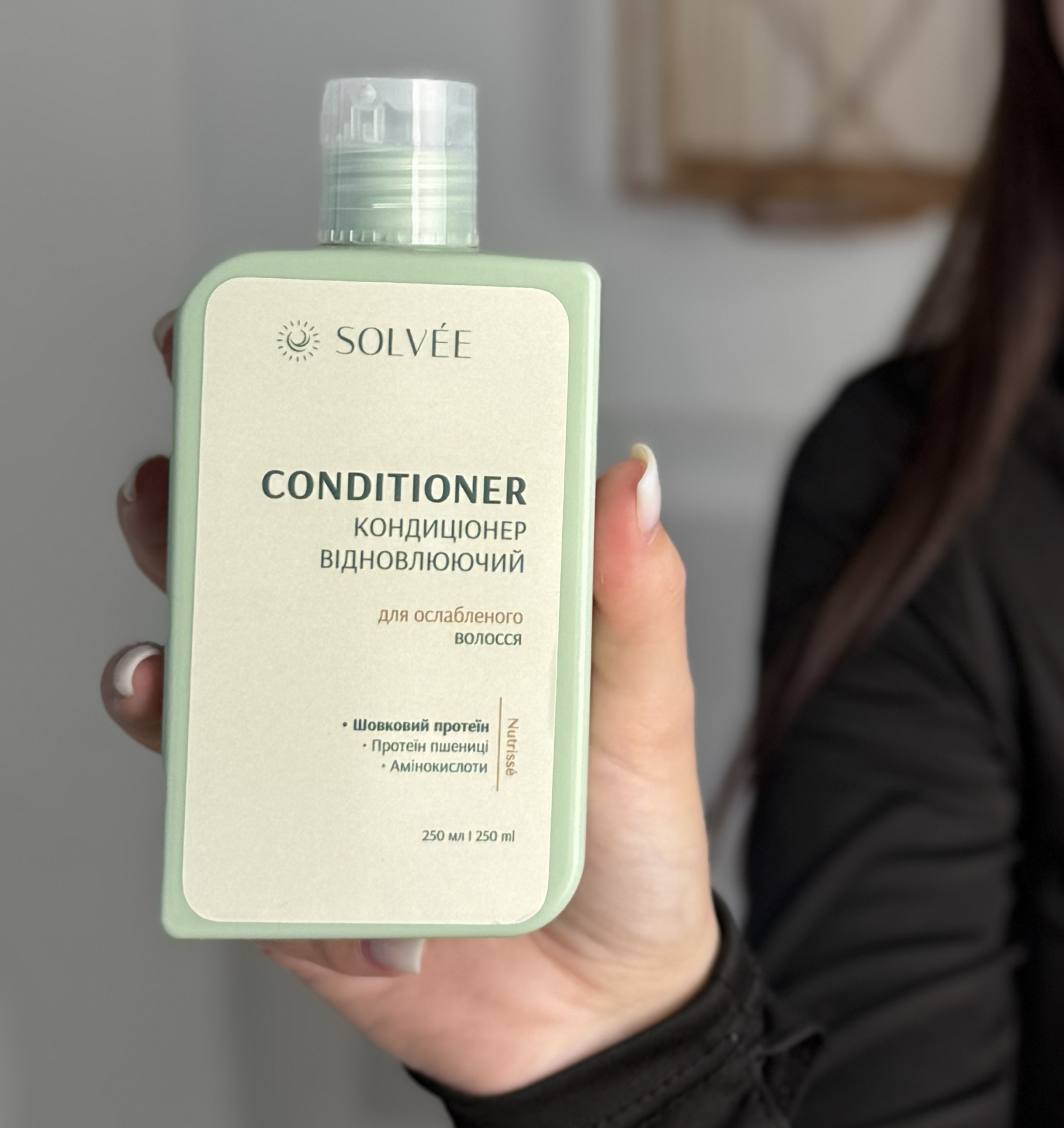
If the strands are damaged, it is worth giving preference to products with reconstructive properties. For example, you can choose SOLVÉE Nutrisse Conditioner. It is designed to care for weakened and damaged hair that has lost smoothness, elasticity, and natural shine. Hydrolyzed silk and wheat proteins help condition damaged areas, while amino acids and organic acids support elasticity and contribute to a smoother condition of the cuticle. Urea, glucose, sodium PCA, and fructose help retain moisture, allowing the strands to remain soft and manageable. SOLVÉE Nutrisse Conditioner helps achieve a glossy hair appearance without heavy products: it helps reduce surface roughness, enhance shine, and achieve smooth hair without the need to overload it with a large number of additional products.
To maintain lightness, it is important not to apply nourishing and film-forming products uncontrollably. If the hair is fine, the main goal should not be maximum sealing, but combining smoothness with movement and volume.
You should also not forget about temperature during styling. High temperatures can damage the cuticle and cortex, especially with regular use of hot tools. Modern research confirms that thermal and chemical procedures can alter the mechanical properties of hair, increase its porosity and breakage. It is also useful for maintaining smoothness and shine to:
- comb the hair without sudden pulling, starting from the lower part of the length;
- use heat protection before hot styling;
- avoid overdrying the strands with excessively hot air;
- regularly use conditioner after washing;
- select leave-in care according to the thickness and condition of the hair;
- control the amount of oils, silicones, and heavy film-forming ingredients if the strands quickly lose volume.
As a result, the hair can remain smooth and shiny while maintaining its movement. This balance is especially important for fine strands.
Glass hair after salon procedures: what happens?
A very pronounced mirror-like effect often appears after procedures that change the shape of the hair, intensive heat styling, or the use of products containing a large amount of film-forming ingredients. In such a situation, the shine can be extremely strong, but it should not be perceived as proof of the complete structural health of the hair.
Thermal and chemical treatment can alter the cuticle, the properties of keratin structures, and the mechanical strength of the fiber. Some of these changes may be irreversible. Cosmetic care helps improve the surface properties of the hair, reduce friction, and mask unevenness, but it does not turn damaged hair into biologically new hair.
Therefore, after intensive procedures, it is especially important not to chase maximum shine at the expense of overloading the hair. It is better to gradually maintain smoothness, protect the lengths from mechanical and thermal effects, and preserve an optimal balance of hydration, conditioning, and lightness.
How can you tell that your hair care routine is weighing your hair down?
One of the most common mistakes is to evaluate the result only immediately after applying a product. The strands may look perfectly smooth in the evening, but already the next day lose volume and freshness.
If the hair has become too flat, quickly becomes greasy at the roots, loses movement, or constantly requires deep cleansing, it is worth reconsidering the amount and richness of the care routine. At the same time, not every problem means silicone buildup specifically: the result is influenced by all components of the care system, washing frequency, hair type, and the way products are applied.
For fine hair, a simple guideline is useful: after care, the strands should be smooth but not heavy; shiny but not greasy; soft but not deprived of volume.
Why can glass hair be difficult to style?


Paradoxically, extremely smooth and shiny hair is not always easy to style. When the surface of the hair is very even, conditioned, and slippery, products and the styling itself may have more difficulty creating sufficient grip needed to hold the shape. This is why hair that reflects light beautifully and looks like a mirror surface sometimes does not hold curls, waves, or root volume well.
This is particularly noticeable on fine hair, which is additionally weighed down by a large amount of conditioning and film-forming ingredients. As a result, it may look perfectly smooth but quickly lose its shape after styling. For such hair, it is important to find a balance between smoothness, shine, and texture rather than aiming for the maximum amount of products for polishing. But what should you do if your hair already lacks volume? In this case, lightweight products for fine hair can help, as well as a volumizing shampoo without silicones and special styling products, namely REVUELE ART Mega Volume Mousse, which combines the texture of a gel with the lightness of a mousse, helping to shape the hairstyle and maintain its form with medium hold. The product is suitable for creating waves and curls, controlling frizz, as well as adding texture, density, and root volume to fine hair. Fixing polymers contribute to styling durability, while special ingredients help protect the strands from moisture loss and mechanical effects. For glass hair, the mousse is useful because it allows you to combine smoothness and shine with volume and movement — exactly the balance that is important to maintain without weighing down fine strands.
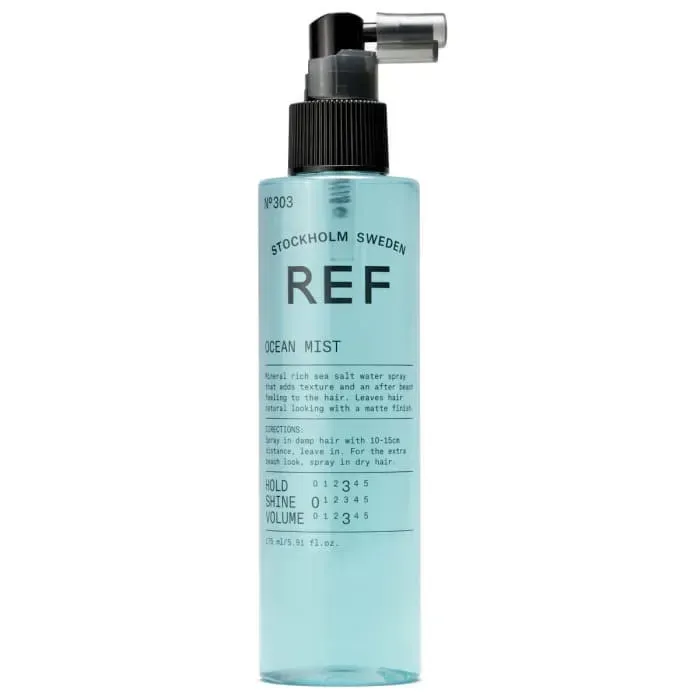
Also, if you are interested in how to add volume to fine hair, REF Ocean Mist №303 can be a good styling option. This spray is designed to give the hair texture, effortless appearance, and a matte beach effect, helping to create natural waves and curls. Quinoa seed extract provides the hair with amino acids, while panthenol contributes to its conditioning, smoothness, and shine. Castor oil supports the elasticity of the strands, while the color protection system with a UV filter helps reduce the effect of solar radiation on the hair color. For a glass hair effect, this salt spray for hair texture should be used in moderation: it works well for creating volume and texture, but unlike dense products, it does not aim to maximally polish the surface, making it especially suitable when you need to combine shine with a light, movable style. More detailed information about the effects and rules for using salt spray can be found in our article How to properly use salt spray in home hair care.
KeratinPro — care that helps maintain balance
In hair care, it is important not to pursue a single visual effect, but to consider the actual condition of the lengths, their thickness, porosity, level of damage, and tendency to lose volume. It is this individual approach that makes it possible to achieve smooth and shiny hair without a weighed-down feeling.
KeratinPro helps select care according to the needs of the hair and the intended goal — from maintaining smoothness and shine to preserving lightness and root volume. In professional hair care, what matters is not the maximum number of products applied, but the correct combination of cleansing, conditioning, protection, and restorative care.
Glass hair is primarily a beautiful reflection of light from a smooth surface. But truly high-quality care begins where shine does not become an end in itself. The optimal result is hair that looks smooth and well-groomed, is easy to comb, maintains movement and volume, and does not require constant layering of cosmetics.
You can also read other interesting articles with us, including: