

Get 10% off at Keratin.pro! Enter the promo code POOL2026 at checkout! P.S. The promo code is valid for all products except those already discounted.
Contents
Sea and swimming pool: how they differ in their effects on hair
What really causes the most damage to hair in summer
Should you wet your hair with fresh water before entering a swimming pool or the sea?
Protection before swimming: why it is better to apply leave-in products beforehand
What should you do after swimming in the sea or a pool?
Is heat protection necessary if your hair dries naturally in summer?
Fluid or hair oil: why they are needed after the entire hair care routine
Summer hair care without unnecessary complications — at KeratinPro
It is difficult to imagine a summer holiday without the sea, a swimming pool, sunshine and long days spent outdoors. However, this is precisely the time of year when hair is exposed to several types of stress simultaneously: ultraviolet radiation, contact with salt water or chlorinated water, high temperatures, wind, frequent washing and mechanical friction. As a result, even healthy hair strands can become drier, rougher, duller and more prone to breakage.
So, which causes more damage to hair: the sea or a swimming pool? There is no straightforward answer. Seawater and pool water affect hair in different ways, and the actual extent of damage also depends on the condition of the hair, how often you swim, how much time you spend in the water, sun exposure and subsequent hair care.
Sea and swimming pool: how they differ in their effects on hair
Hair is a fibre primarily composed of keratin. Its outer layer, known as the cuticle, partially protects the inner structures from environmental influences. When the cuticle becomes damaged or less smooth, the hair retains moisture less effectively, tangles more easily, loses its shine and becomes more susceptible to mechanical damage.
Seawater contains significant amounts of salt. Salt crystals may remain on the hair after it dries, and the combination of salt water, sunlight, wind and high temperatures creates unfavourable conditions for dry and porous hair. This is why, after spending an entire day at the beach, hair often feels stiffer, rougher and more tangled.
The situation is different in a swimming pool. Disinfectants containing chlorine are commonly used to disinfect pool water. They are essential for making swimming pool use safe, but contact with chlorinated water can affect the condition of the hair. Studies indicate that changes in hair surface properties and colour can occur in people who swim regularly in pools. Such changes may be particularly noticeable in bleached, porous or chemically treated hair.
What really causes the most damage to hair in summer
There is an important detail that often goes unnoticed. Someone may spend 20 minutes in the sea or a swimming pool and then spend several hours in the sun with wet hair. In this situation, the hair is exposed to the combined effects of several factors, making it virtually impossible to distinguish damage caused solely by salt or chlorine.
Ultraviolet radiation also plays an important role. It affects hair proteins, pigments, shine, mechanical properties and surface structure. The problem may be particularly noticeable in coloured hair because sunlight can accelerate colour changes. In summer, hair is exposed to several factors simultaneously:
- ultraviolet radiation;
- salt water or chlorinated water;
- high temperatures;
- dry air and wind;
- frequent washing after swimming;
- friction against towels, clothing and various surfaces;
- brushing wet and tangled hair;
- additional exposure to heat from a hair dryer, straightener or curling iron.
The lengths of the hair usually experience the greatest stress, particularly porous, bleached, coloured and already damaged strands. That is why summer hair care should not be complicated, but it should be consistent: protect your hair before swimming, cleanse it after leaving the water, and provide the lengths with appropriate conditioning and restorative care.
Should you wet your hair with fresh water before entering a swimming pool or the sea?
Yes, this is a simple habit worth incorporating into your summer hair care routine. Before entering the water, you can wet your hair with ordinary fresh water. Wet hair is already saturated with water, so it may absorb less water from a swimming pool or the sea than completely dry hair.
However, this step should not be treated as complete protection. It does not create a protective barrier on the hair against salt, chlorinated water or ultraviolet radiation. Therefore, when spending extended periods at the beach or by the pool, it is worth combining pre-wetting your hair with an appropriate leave-in product.
After swimming, it is best to rinse your hair with fresh water. The longer seawater salt or components of chlorinated water remain on the hair, the longer they stay in contact with its surface.
Protection before swimming: why it is better to apply leave-in products beforehand
One of the most common mistakes is remembering about hair care only after returning from the beach. In reality, it is worth starting your summer hair care routine before your hair comes into contact with water.
A leave-in product can create a protective conditioning layer on the hair surface, reduce friction and help keep the cuticle smoother. If the product also contains UV filters, it can be part of your hair protection against sunlight. In this case, a suitable choice would be Sergilac The All in One Spray.
This is a multifunctional leave-in conditioner that makes daily hair care easier, especially in summer. Silk proteins smooth the strands, improve their elasticity and give them a healthy shine, while also helping to reduce static. Panthenol helps maintain adequate moisture levels, softens the hair and creates a protective layer on its surface. UV filters help protect the strands against the adverse effects of sunlight, which can intensify dryness and weaken their condition. The spray is suitable for summer holidays by the sea, relaxing on the beach and everyday sun exposure. It is a practical part of a summer hair care routine that helps maintain smoothness, softness and a well-groomed appearance without the need to rinse the product out.
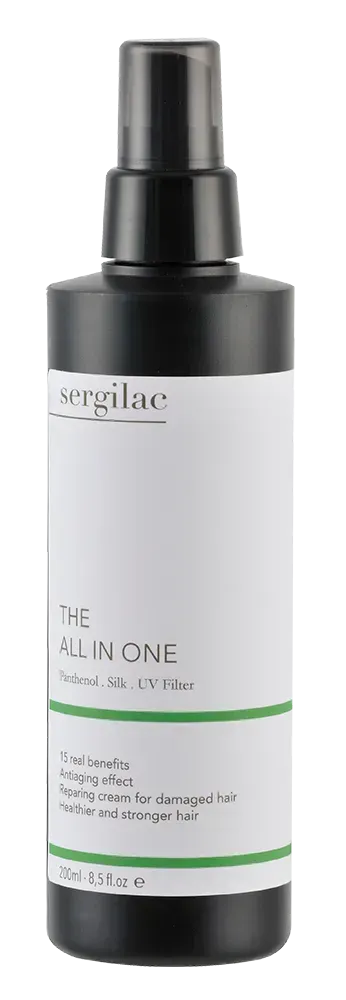
The product should be distributed through the lengths of the hair before going out in the sun and swimming, paying particular attention to the driest areas. Its lightweight texture also makes it well suited for regular use in summer, when we want to avoid weighing the strands down excessively.
What should you do after swimming in the sea or a pool?
After swimming, the most important thing is not to leave your hair without cleansing and care for too long. If possible, rinse it with fresh water immediately. Then, if necessary, use shampoo, as well as a conditioner or hair mask, depending on the condition of the hair lengths.
Lipid masks are particularly suitable after swimming in the sea or a pool. They can improve the condition of the hair shaft surface, reduce roughness, make detangling easier and help the strands become more elastic and well-groomed.


deeply Lipido Basic Mask can be considered as an option for lipid care for hair with minor damage. The product is designed to support the lipid layer and improve hair smoothness and elasticity. The mask can be used as a standalone cold hair treatment or as a base in professional procedures. In a summer home care routine, it is worth using after cleansing when the hair lengths require more intensive conditioning.
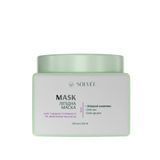
Another option is SOLVEE Soie Lipid Mask, designed for dry, porous, rough and unruly hair. The lipid complex, shea butter and argan oil help soften and smooth the strands and increase their elasticity. The amodimethicone in the ingredients supports conditioning, makes detangling easier and helps reduce the feeling of roughness. This type of mask is particularly useful after periods of intensive sun exposure, frequent swimming and regular heat styling.
For more comprehensive restorative care, it is worth considering the lipid base Molécula Suporte de Lípido. It is designed to work with the lipid layer of the hair shaft and improve its smoothness, elasticity and appearance. The product can also be used as one of the stages in a multi-step professional hair restoration treatment. In a home care routine, it is important not to try to compensate for severe damage by using a large number of different products at the same time: hair care should be tailored to the actual condition of the strands.
After using a mask, the hair should not feel heavy or excessively greasy. If your hair is fine, it is best to start with a small amount of product and apply it mainly to the lengths and ends rather than to the scalp.
Is heat protection necessary if your hair dries naturally in summer?
Yes, especially if you use a hair dryer, curling iron or straightener after swimming in the sea or a pool. Sunlight and contact with water already place additional stress on the hair, so it is not worth increasing this stress unnecessarily by exposing it to high temperatures.


FAV-1 ALL IN ONE MULTI THERMO Cream Heat Protection is suitable for people who regularly style their hair using hot tools. According to the manufacturer's information, the product provides protection against high temperatures of up to 230 °C and has a creamy texture that spreads through the lengths of the hair. It also supports conditioning, smoothness and frizz reduction. However, it is worth remembering that the stated heat protection temperature does not mean that you should use a straightener at its maximum temperature setting — the lower the effective temperature and the fewer passes you make over each strand, the better for its condition.
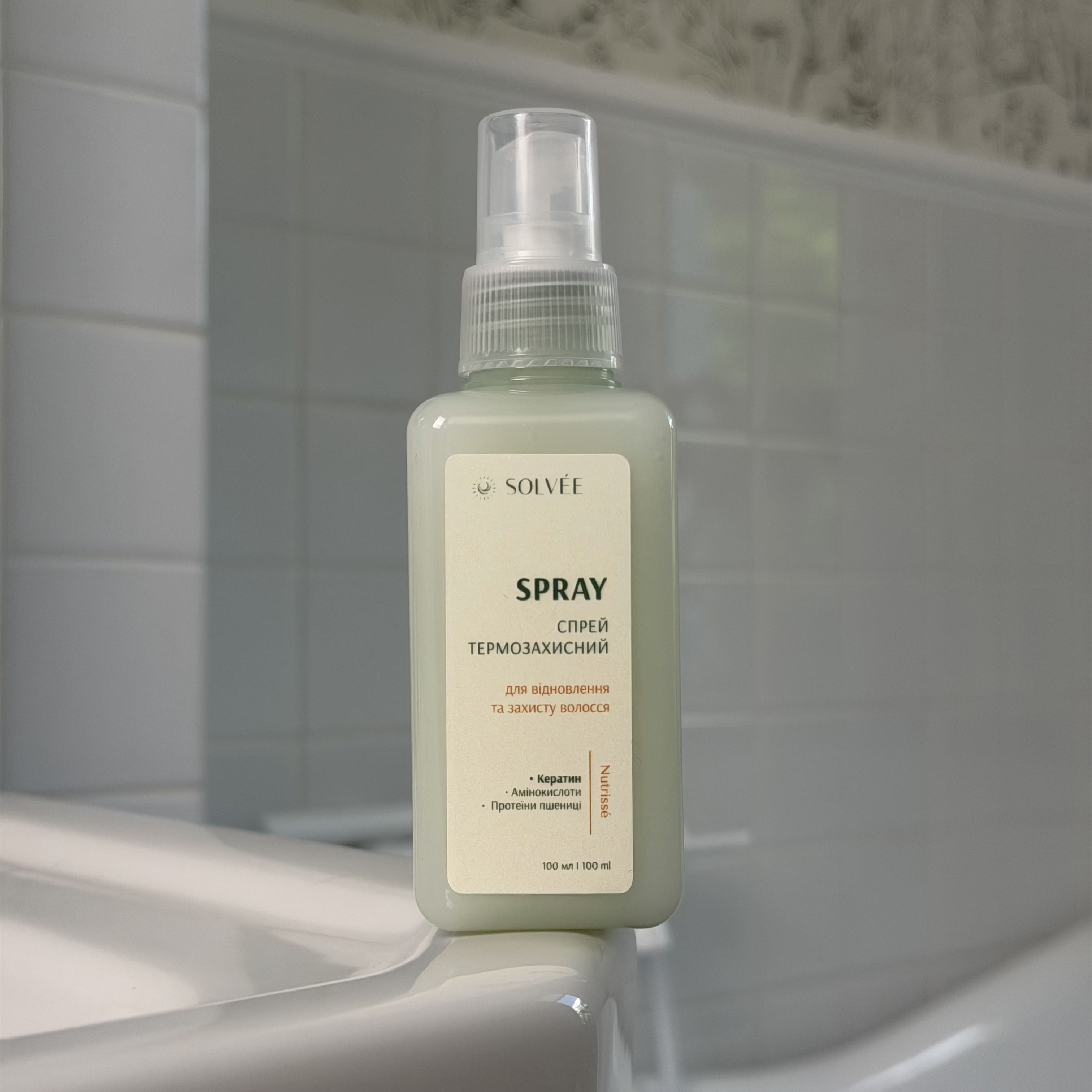
SOLVEЕ Nutrisse Spray is another option for people who regularly use a hair dryer or other hot styling tools. Its declared ingredients include conditioning agents and silicones, which help smooth the hair surface, improve slip and make detangling easier. Keratin, amino acids and wheat proteins complement the hair care routine, while moisturising ingredients help maintain the condition of the hair lengths. This type of product is particularly convenient for dry, porous, coloured and damaged hair.
Fluid or hair oil: why they are needed after the entire hair care routine
After cleansing and applying a mask, the hair has already undergone the basic stages of care. A lightweight fluid or hair oil can be the final step, especially if the ends are dry, porous and prone to tangling.


holy silk touch is a silky leave-in hair fluid that is useful for daily care, especially in summer, when the strands are exposed to sunlight, wind and dryness. Jojoba oil helps soften the hair and reduce moisture loss, while macadamia oil smooths its surface, makes styling easier and helps control frizz. Wheat germ oil supports the nourishment of the strands and enhances their natural shine, while vitamin E helps protect them against external factors. The lightweight texture makes it easy to distribute the product through the lengths of the hair without the need to rinse it out. The fluid is suitable after a day spent at the beach, during summer holidays and whenever the hair becomes rough, dull or difficult to detangle. It is a convenient way to smooth the strands, give them softness and shine, and improve the appearance of your summer hairstyle.
deeply Delicate Silk Fluid — a silk fluid that can be used as the final step in hair care, particularly on the ends. The coconut oil in its ingredients provides a lipid component to the treatment and helps smooth and soften dry strands. It is worth applying the product in small amounts because its purpose is not to make the hair excessively oily, but to reduce roughness and improve slip. For dry ends, it can be a convenient finishing touch after washing and applying a mask.
SOLVEE Lueur Fluid is also suitable as the final step in a summer hair care routine. This lightweight fluid has been developed to smooth the hair, add shine and reduce frizz, while argan oil helps condition the hair lengths and maintain their softness. It is particularly suitable for dry, porous, coloured and damaged strands that quickly lose their smoothness after swimming or washing. Applying a small amount of the product to the ends helps achieve a more polished hairstyle without leaving the hair feeling sticky or clumped together.
A fluid, serum or hair oil is best applied after completing the basic hair care routine rather than using it as a substitute for a mask. These are different stages of hair care: protection before swimming, cleansing and restoration afterwards, followed by — final smoothing of the hair lengths.
Summer hair care without unnecessary complications — at KeratinPro
At KeratinPro, you can put together a hair care routine tailored to various summer situations: from protection before swimming in the sea or a pool to a restorative mask and a product for finishing the care of the ends. The catalogue offers professional products in various forms, including hair restoration products, making it easy to select an individual hair care routine.
We help you understand the purpose of individual products: what to apply before swimming, how to care for the lengths after cleansing, when heat protection is needed and what to use as the final step in your routine. This approach makes it possible to put together a hair care routine suited to the specific condition of your hair — natural, coloured, bleached, dry or porous.
The main principle is simple: do not wait until your hair becomes dry and brittle after your holiday; instead, protect it throughout the period of intensive sun exposure and frequent swimming. A leave-in product before contact with water, lipid care after cleansing, heat protection before hot styling, and a fluid or hair oil for the ends — this is a straightforward routine that is sufficient to take much better care of the condition of your hair lengths during summer.
You can also read other interesting articles on our website, including: