

Get 10% off at Keratin.pro! Enter the promo code WASHPREPOO at checkout! P.S. The promo code is valid for all products except those already discounted.
Contents
What happens to the hair during washing?
Pre-poo: how the method works at the level of hair structure
What problems can pre-poo help solve?
Who should try the pre-poo method?
Which products should you choose for pre-poo?
How to perform pre-poo correctly?
Pre-poo and porosity: what is the connection?
Is pre-poo needed after keratin or botox?
Common mistakes during pre-poo
If your hair becomes dry, stiff, more tangled after washing, or the ends look split, the problem may not be caused only by an improperly selected shampoo. The cleansing process itself also places a certain amount of stress on the hair fiber: water changes its condition, while surfactants remove impurities and some of the lipids. This is why the pre-poo method for hair has emerged in hair care — applying a product to the strands before shampooing.
The name comes from the English term pre-shampoo, meaning «before shampoo». Most often, oil, conditioner, a mask, or a special pre-poo product is used before washing. The aim of the method is not simply to make the hair smoother, but to reduce the negative impact of the subsequent washing process on the hair fiber. Studies of hair properties show that lipids play an important role in maintaining its barrier and mechanical properties. Let us take a closer look at how pre-poo for hair works, what this method is, and whether your curls need it.
What happens to the hair during washing?
To understand the principle of pre-poo, it is worth first understanding what a hair fiber consists of. The hair shaft consists predominantly of keratin structures and has three main zones: the cuticle, cortex, and, in some cases, medulla. The cortex makes up most of the fiber and is responsible for its strength and a significant part of its mechanical properties, while the cuticle performs a protective function.
The outer surface of the cuticle has a lipid layer that gives the hair hydrophobicity and reduces friction between fibers. Damage to or loss of surface lipids makes the hair more prone to dryness, static electricity, frizz, and mechanical damage.
When the strands become wet, they absorb water, which causes the hair to swell due to water absorption. At the same time, repeated wetting and drying cycles, washing, combing, and other mechanical actions can gradually increase cuticle wear — osmotic damage to the hair occurs during washing. This process is particularly relevant for damaged or chemically treated hair. This is precisely where the concept of pre-poo works: before contact with shampoo, the hair receives an additional protective layer or conditioning component.
Pre-poo: how the method works at the level of hair structure
Pre-poo does not literally restore damaged strands. The hair shaft is already formed and does not have the ability to undergo biological regeneration. It is more accurate to speak of protection, conditioning, and reducing further damage.
The mechanism depends on which product is used. Oil applied before washing the hair can create a hydrophobic film on the surface, reduce friction, and in some cases partially penetrate the fiber. A mask or conditioner applied before shampooing primarily helps reduce friction, make detangling easier, and make the hair surface smoother.
What problems can pre-poo help solve?
The method should primarily be considered an additional step for hair that has difficulty tolerating regular washing. It is particularly interesting in situations where the lengths need more protection than the scalp. Pre-poo may be appropriate if you notice:
- dryness and a feeling of stiffness along the lengths after shampooing;
- severe tangling of the hair during or after washing;
- increased breakage along the lengths and at the ends;
- porosity that causes the hair to quickly lose its comfortable condition after washing;
- damage after lightening, coloring, or regular heat styling;
- the need for additional protection of dry ends.
At the same time, pre-poo is not a universal way to treat every problem. It is only a way of protecting the hair from drying out during washing. If your hair becomes greasy quickly, feels weighed down, or loses volume, overly rich care before every wash may worsen the cosmetic result.
Who should try the pre-poo method?
People with dry, porous, or damaged lengths can usually benefit the most from pre-wash care. This is especially relevant if your hair takes a long time to comb after washing or quickly becomes rough.
Pre-poo can also be used for normal hair, but it is not necessarily needed after every wash. Healthy hair does not require the maximum amount of products simply because an additional step is popular on social media.
For an oily scalp, it is important to distinguish between the hair and the scalp. Pre-poo is primarily applied to the lengths, especially the middle section of the hair and the ends. Applying a large amount of oil directly to the scalp can make subsequent cleansing more difficult and does not automatically provide an advantage simply because the product is used before shampooing.
Which products should you choose for pre-poo?
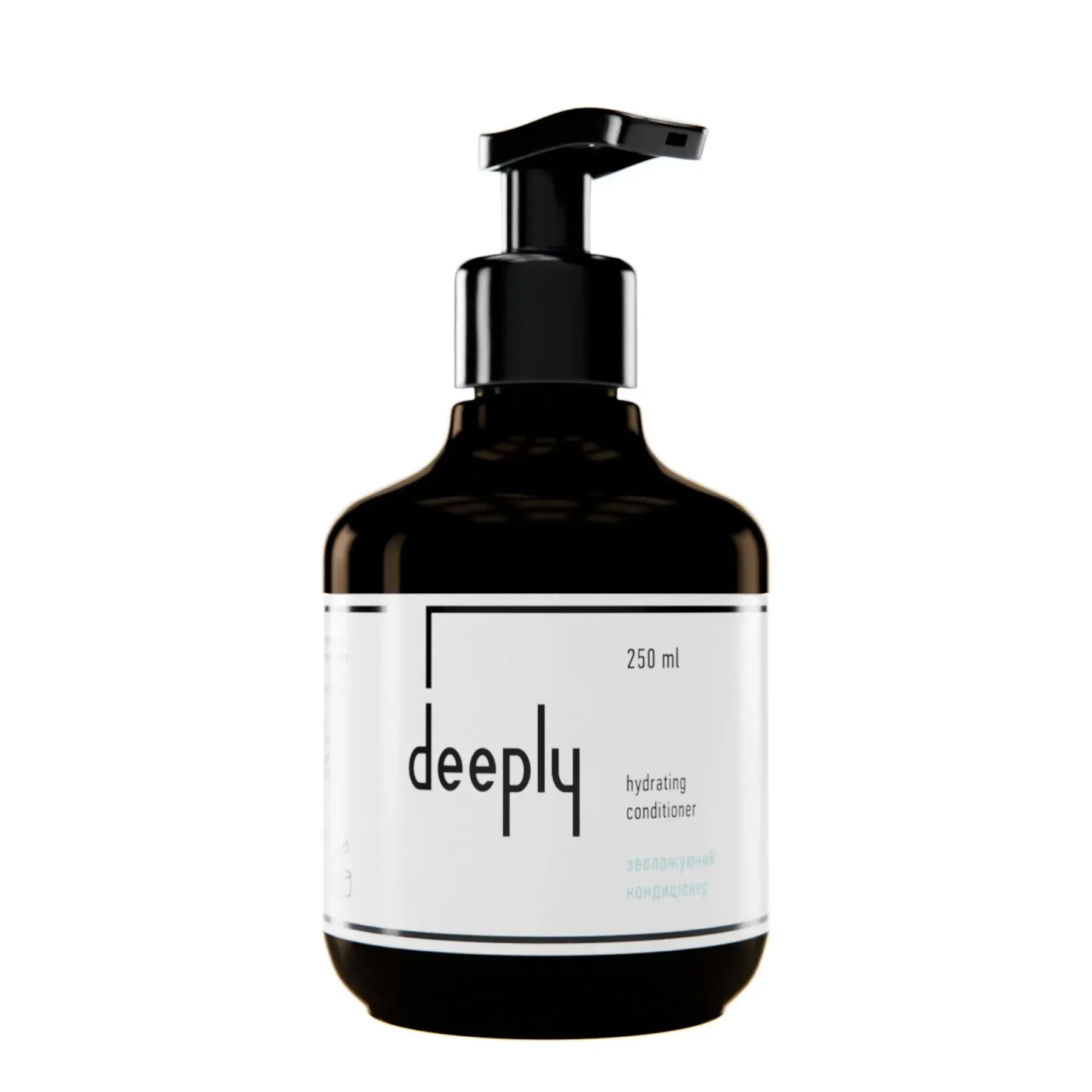


A good choice for pre-poo can be conditioners and masks with emollient, moisturizing, and conditioning ingredients, especially if the hair is fine, dry, or damaged:
- deeply Hydrating Conditioner. This is a moisturizing conditioner that complements care for dry, porous, and breakage-prone lengths well. The formula with glycerin, propylene glycol, panthenol, and apricot kernel oil helps maintain an optimal moisture level and makes the hair softer. Vitamin E and oily components contribute to smoothness, shine, and comfortable combing. The product can be used after every wash, and in a pre-poo system it is particularly suitable for lengths that need additional conditioning. In particular, it can be used as a pre-poo for dry hair.
- deeply Hydrating Mask. This mask is designed for dry, porous and weakened hair, providing intensive hydration and nourishment along the entire length. The blend of plant oils, including apricot kernel, soybean and castor oils, helps smooth the hair, reduce breakage and improve its overall condition. Panthenol and glycerin support optimal moisture levels, leaving the strands softer and more elastic. Vitamin E adds smoothness and a natural shine, while conditioning ingredients make the mask suitable for regular hair care.
- SOLVÉE Nutrisse Conditioner. Created for hair that is regularly exposed to coloring, blow-drying, heat styling, or other stress. Hydrolyzed silk and wheat proteins provide a conditioning effect, help fill surface irregularities, and make the hair smoother. Amino acids, organic acids, and moisturizing ingredients support elasticity and help reduce the feeling of dryness. Thanks to this, the conditioner fits well into care for damaged lengths that need additional protection before and after washing.
- holy silk conditioner. This is a conditioner for regular care that focuses on the smoothness, softness, and elasticity of the hair. Silk proteins help condition the surface of the fiber, reduce roughness, and make combing easier, while almond oil complements the formula with emollient and lipid care. Betaine and panthenol contribute to maintaining hydration and protecting the hair from overdrying, thanks to which the lengths look more well-groomed. The lightweight texture allows the product to be used regularly, including as part of comprehensive care for the lengths after the pre-poo procedure.
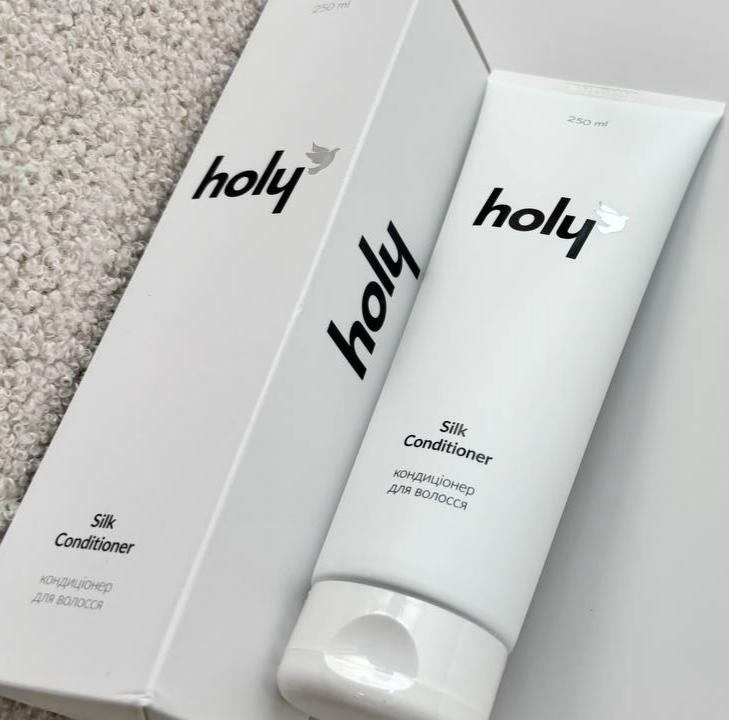
Thus, pre-poo can be adapted not only for thick or very dry hair. A conditioner or mask before washing is an opportunity to additionally soften and protect the lengths by choosing a product according to their porosity, thickness, and condition. At the same time, it is important to follow the manufacturer's recommendations regarding the method of use and not overload the hair with an excessive amount of product.
How to perform pre-poo correctly?
The technique depends on the specific product, so first of all you should follow its instructions. The general principle is simple: distribute the product over dry or slightly damp lengths before washing, leave it on for the recommended time, and then proceed with regular cleansing. To prevent the procedure from turning into overloading the hair, several rules are important:
- start with a small amount of product, especially if the hair is fine;
- apply the product mainly to the lengths and ends unless the manufacturer specifies another method;
- distribute it evenly without saturating the hair with excess product;
- do not leave it on for an unnecessarily long time — more time does not automatically mean a better result;
- after the recommended time, rinse the hair thoroughly and use shampoo according to the needs of the scalp;
- if the lengths need conditioning, you can add your usual conditioner or mask after shampooing.
The main purpose of the procedure is to prepare the lengths for cleansing, not to replace all subsequent care. If the hair becomes heavy, dull, or loses its freshness more quickly after pre-poo, you should reduce the amount of product or the frequency of the procedure.
Pre-poo and porosity: what is the connection?
Hair porosity is often associated with the condition of the cuticle and the ability of the fiber to interact with water. However, it is important not to oversimplify this characteristic — porous strands do not always need more oily ingredients. Hair behavior is influenced by its structure, previous chemical procedures, mechanical and thermal stress, the condition of the cuticle, and the composition of the products used.
Porous hair and the pre-poo method are often associated with each other. This approach to cleansing can be useful as a protective step before washing. In particular, it has been demonstrated that applying coconut oil can prevent an increase in porosity associated with the action of surfactants. Mask or conditioner ingredients can also be beneficial.
Is pre-poo needed after keratin or botox?
After hair modification procedures, the needs of the lengths may change. Keratin straightening, hair botox, coloring, and lightening are not identical procedures, so recommendations for home care should also differ.
If the hair has become smoother and requires less intensive care after the procedure, it is not necessary to add pre-poo simply as a preventive measure. An excess of oils or heavy conditioning ingredients can take away volume and make the hair look visually overloaded, and with prolonged use can lead to hair overconditioning.
At the same time, if the lengths remain dry, prone to tangling, or are regularly subjected to heat styling, pre-poo can become an additional protective step. The main thing is to evaluate not the popularity of the method, but the reaction of the specific hair.
Common mistakes during pre-poo
The most common mistake is to perceive the procedure as intensive therapy, where more product and a longer processing time are assumed to produce a better result. In reality, the effectiveness of care is determined by the compatibility of the formula with the needs of the hair and the correct amount used. Pay attention to the following points:
- applying a large amount of oil to fine hair;
- using pre-poo on the scalp without necessity;
- using rich products too frequently;
- insufficient cleansing after pre-poo;
- evaluating the effect only by the feeling of softness, without considering volume, shine, and the condition of the ends;
- expecting the procedure to restore an already destroyed hair structure.
Proper pre-poo is a way to distribute the load between the stages of hair care correctly. If the hair is easier to comb afterward, becomes less tangled, and feels more comfortable after washing, the method can be kept in your routine.
How to understand whether pre-poo is right for you?
It is better to evaluate a new step not after one use, but over several washes. At the same time, it is advisable not to change your shampoo, mask, conditioner, and leave-in care simultaneously — otherwise, it will be difficult to determine what exactly affected the result. Signs of a successful choice may include:
- the hair is easier to comb after washing;
- the lengths become less tangled;
- the ends look more well-groomed;
- the feeling of dryness after shampooing decreases;
- the hair remains sufficiently lightweight and does not lose volume;
- the surface of the lengths becomes smoother and more comfortable to the touch.
If, after several applications, the hair becomes heavy, dull, sticky, or gets dirty more quickly, this is a signal to reconsider the amount of product, frequency of use, or the product itself. Hair care should adapt to the hair, not the other way around.
Why choose hair care at KeratinPro?
If the hair is brittle after washing, the causes can be different. And to improve the condition of the strands, it is worth, first of all, organizing proper daily care for them. Proper hair care begins with understanding the needs of the lengths and scalp. That is why when choosing products for pre-poo, it is important to consider the condition of the hair, its porosity, the presence of chemical procedures, and the usual washing routine.
KeratinPro helps create a systematic care routine for different hair types and conditions. In the online store, you can choose professional products for cleansing, conditioning, masks, leave-in care, and maintaining the results of salon procedures. This approach allows you not simply to repeat popular beauty trends, but to create a routine according to the actual needs of your hair.
Pre-poo can become a useful addition to home care if used appropriately. Its main value lies in providing preliminary protection to the fiber before cleansing, reducing mechanical stress, and maintaining a comfortable condition of the lengths.
You can also read other interesting articles on our website, including: