

Get 10% off at Keratin.pro! Enter the promo code HAIRBOOSTER26 at checkout! P.S. The promo code is valid for all products except those already discounted.
Contents
Booster and Mask: What Is the Main Difference?
Why Are Lipids Important for Damaged Hair?
Proteins in Hair Care: When Is Support for Hair Structure Needed?
How Does a Booster Differ from a Mask in Practice?
- deeply Lipido Booster — Concentrated Lipid Care
- deeply Protein Booster — When Protein Reconstruction Is Needed
Professional hair care has long gone beyond shampoo, conditioner, and the occasional application of a mask. Salon treatments and at-home reconstruction programmes may include concentrated products designed for different purposes: basic masks, boosters, ampoules, serums, and reconstructing treatments. This raises a perfectly logical question: if both a mask and a booster are intended to improve hair condition, how do they differ? Let us take a closer look. We will also explain when to use a mask and when to use a hair booster, what these products are, and where you can buy them.
What Is a Hair Mask?
A mask is an intensive hair care product that is usually left on the hair longer than a conditioner. Its purpose depends on the specific product: a mask may help condition the hair, reduce dryness, improve smoothness and make detangling easier, support elasticity, or address specific signs of damage.
Professional masks may have moisturising, lipid-based, protein-based, reconstructing, or combined effects. Therefore, the term “mask” does not automatically imply either surface-level care or a weaker effect. Everything depends on the specific ingredients and product technology. This is precisely why a properly selected mask can significantly change how the hair feels after washing. Interesting information about masks and their role in a regular at-home hair care routine can also be found in our article Why a Mask Is Not Always Better Than a Conditioner.
And What Is a Hair Booster?
A booster is a concentrated product developed to target a specific problem intensively or enhance the results of a professional treatment. In hair care, this name can refer to different types of products, so it is not worth relying solely on the word “booster” on the packaging.
In professional hair care, boosters often contain a high concentration of a particular group of active ingredients. These may include lipids or proteins used in reconstruction programmes for damaged hair. Such a product may serve as a standalone treatment step or be used together with other products, depending on the manufacturer's recommendations.
The main characteristic of a booster is its targeted action. While an ordinary mask may provide comprehensive conditioning, a concentrated booster more often focuses on a specific aspect of hair condition: supporting the lipid barrier, improving the condition of porous hair, protein reconstruction, reducing breakage, or improving elasticity.
Therefore, a booster does not necessarily need to be used after every wash. The important thing is to identify the hair's specific needs and incorporate the product appropriately into the hair care routine.
Booster and Mask: What Is the Main Difference?
The simplest way to explain it is this: a mask is usually a complete hair care product, whereas a booster is a more concentrated tool designed to address a specific problem. To avoid mistakes when choosing a product, it is worth evaluating several characteristics:
- the product's purpose — regular care, supporting hair condition, or intensive reconstruction;
- the concentration and type of active ingredients;
- the nature of the damage — dryness, porosity, breakage, loss of elasticity, the effects of bleaching, or frequent heat styling;
- the method of application — on its own, as a treatment step, or in combination with other products;
- the frequency of use recommended by the manufacturer;
- the condition of the hair after treatment — it should become easier to style and pleasant to the touch, rather than weighed down.
Why Are Lipids Important for Damaged Hair?
Lipids are an important part of hair structure and its surface protection. They contribute to the hair's hydrophobic properties, help reduce moisture loss, and affect how smoothly the hair moves during detangling.
After bleaching, colouring, chemical treatments, or frequent exposure to high temperatures, the properties of hair may change. Hair becomes drier and more porous, retains moisture less effectively, develops more frizz, and is more easily damaged by mechanical factors. This is why a lipid-focused approach to professional hair care is particularly important for porous and dry hair. However, a lipid-based product is not a universal solution for every type of damage. If the hair needs support from other ingredients, a comprehensive approach is worth considering.
deeply Lipido Basic Mask is a professional lipid-based mask that can be used for heat-free hair care or as a preparation step before heat treatments, including keratin straightening and hair botox treatments. Its purpose is associated with supporting the hair's lipid layer and reducing signs of damage. The product is particularly suitable for hair with a mild to moderate degree of damage when additional density and protection are needed without an excessively intensive effect. Intended exclusively for professional use.
A lipid mask helps achieve a more uniform hair structure and reduce the impact of external factors. As a result, the hair may become more elastic, smooth, and well-conditioned to the touch. However, if the damage is more advanced, it is worth considering a more intensive product, such as deeply Amino Basic Mask, depending on the hair's condition and the purpose of the treatment.
Proteins in Hair Care: When Is Support for Hair Structure Needed?
Protein ingredients are frequently used in products for damaged hair because hydrolysed proteins can interact with the hair surface and help improve its cosmetic and mechanical properties. This type of care is particularly useful for porous hair that has become less resilient, more brittle, or more difficult to style.
deeply Protein Basic Mask is intended for the professional care of porous hair with minor damage. Its ingredients include hydrolysed proteins and keratin-based ingredients, which help condition the hair, improve how it feels to the touch, and support a denser, stronger appearance of the strands.
The mask can be used as a standalone step in a restorative heat-free hair care routine or as a base product before specific heat treatments, if this is предусмотрено by the relevant technology. For hair with moderate damage and porosity, this method of application may form part of a systematic reconstruction programme. However, if the hair structure is significantly weakened, it is worth considering more intensive products and a professional treatment protocol rather than trying to compensate for the problem by increasing the amount of mask used. Like the previous product, this mask is intended exclusively for professional hair care.
How Does a Booster Differ from a Mask in Practice?


Imagine a typical situation: the hair is regularly coloured, has become drier, is frizzy, the ends are splitting, and the strands quickly lose their smoothness after washing. In this case, a mask can become a regular part of the hair care routine, helping improve conditioning and the appearance of the hair.
A booster, on the other hand, can be used when a more concentrated reconstruction step is needed. It does not necessarily replace a mask: within a professional system, these products can complement each other, either sequentially or as part of a comprehensive approach.
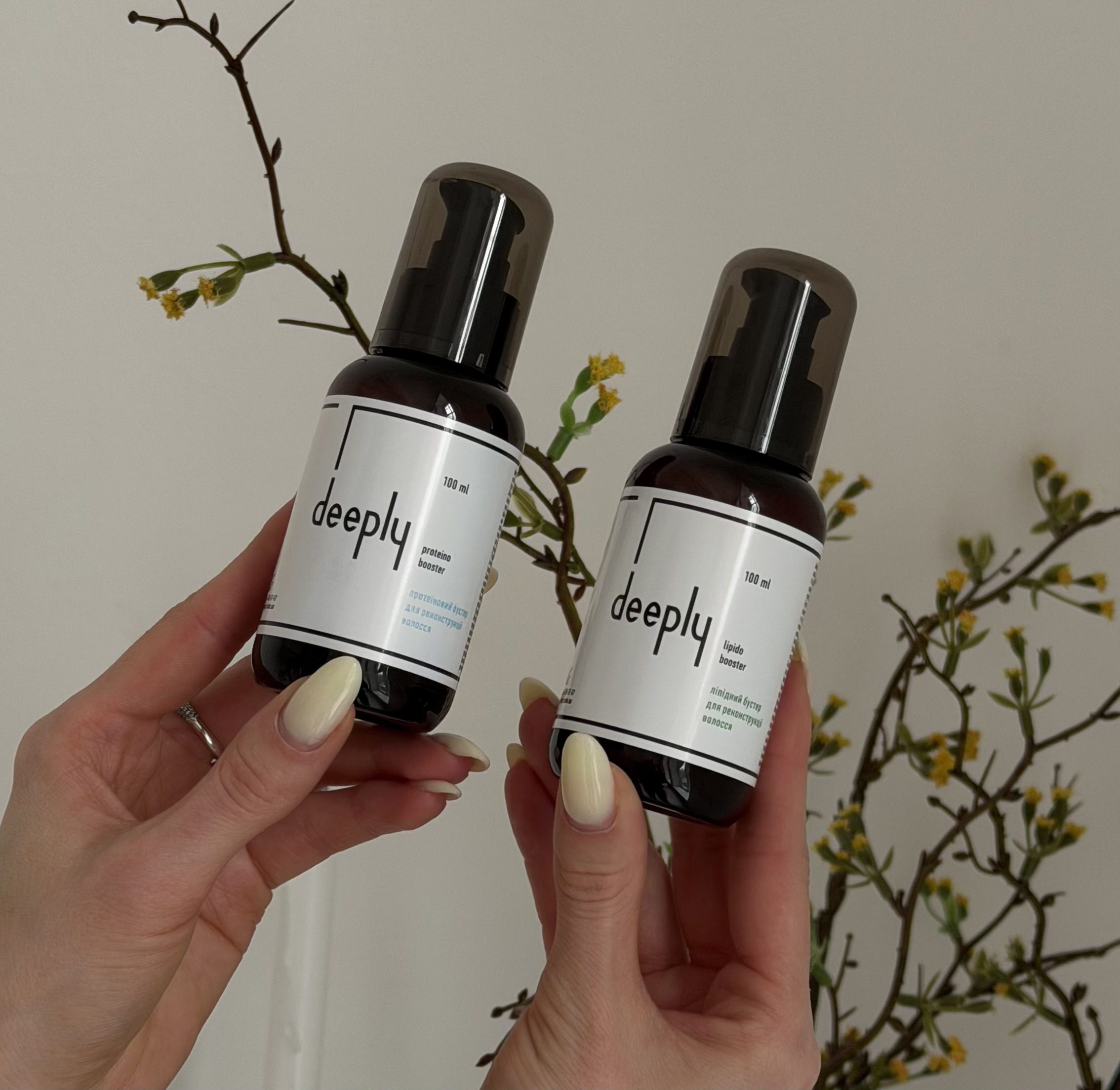
deeply Lipido Booster — Concentrated Lipid Care
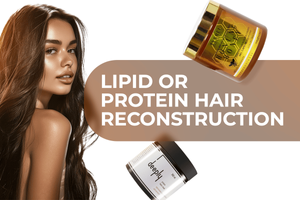
deeply Lipido Booster — a lipid booster for hair reconstruction, designed for dry, porous, weakened, and damaged hair. Its main purpose is to target the lipid component of the hair structure, which is important for its protective properties, smoothness, and ability to retain moisture. This is why this type of care is particularly useful after bleaching, colouring, chemical treatments, or regular heat styling.
Concentrated lipid care helps smooth the hair and improve its elasticity, reduce the feeling of dryness, and improve its cosmetic condition. By reducing porosity, the hair surface may appear more even, while the strands may look denser and shinier. This product is worth considering as a specialised reconstruction step for hair that requires lipid care.
deeply Protein Booster — When Protein Reconstruction Is Needed
deeply Protein Booster — a concentrated protein product for the care of weakened, porous, and damaged hair. Its action is associated with supporting hair structure through protein ingredients, including hydrolysed wheat and milk proteins. These ingredients may help condition the hair, retain moisture, and improve its elasticity and smoothness.
The product also contains hyaluronic acid, which is used in cosmetics as an ingredient with a high capacity for binding water. As part of comprehensive hair care, this makes it possible to address not only the feeling of dryness but also overall hair manageability when detangling and styling. The booster may be particularly useful for porous hair that becomes frizzy easily and struggles to maintain its smoothness.
After application, the hair will look denser, shinier, and more manageable. However, the result depends on the hair's initial condition, the frequency of treatments that cause damage, and the overall hair care routine, rather than on a single product.
Lipid or Protein Booster: Which One Should You Choose?
The choice between a lipid booster and a protein booster should depend on how the hair behaves. The same hair type may require different care at different times: certain ingredients may be particularly useful after bleaching, while others may be more beneficial after prolonged heat styling. It is worth paying attention to the following signs:
- if the hair is dry, rough, porous, quickly loses its softness, and clearly needs lipid care, it is worth considering products with a lipid-based effect;
- if the strands are weakened, have lost their elasticity, have become more brittle, and struggle to hold their shape, protein care may be appropriate;
- if the hair is simultaneously dry, porous, and weakened, a professional programme may include alternating or combining different approaches to hair care;
- if the hair becomes stiff, dull, or difficult to detangle after using a product, it is worth reassessing the frequency of application and the overall balance of the hair care routine;
- if the damage is significant, do not try to address it solely with products intended for home use — regularly trimming severely split ends and limiting damaging factors are also important.
The main conclusion is simple: the type of active ingredient should match the hair's needs. There is no universal booster that can address every problem equally effectively.
Professional Hair Care at KeratinPro
At KeratinPro, you can choose professional products for different stages of hair care — from basic conditioning to hair reconstruction products. The catalogue includes products designed for different purposes, making it possible to create a hair care programme tailored to the hair's actual needs.
Choosing the right professional hair care does not mean having the maximum number of products in your bathroom. It means following a well-planned system in which a mask, booster, conditioner, and other products each serve their purpose and complement one another. This approach helps keep the hair smooth, elastic, well-conditioned, and as resistant as possible to everyday stress.
You can also read our other interesting articles, including: