

Get 10% off at Keratin.pro! Enter the promo code BLONDEKERAT at checkout! P.S. The promo code is valid for all products except those already discounted.
Contents
Why does blonde hair turn yellow specifically after summer?
Ultraviolet radiation and its effect on blonde hair
Why does bleached hair react more strongly to summer?
Water, swimming pools and mineral deposits: another cause of colour changes
Why can yellow tones become more pronounced after washing?
How do purple products work against yellow tones?
What should you do if your blonde hair has turned yellow after summer?
How should you care for blonde hair after summer?
What should you avoid doing to yellowed blonde hair?
Is fresh toning necessary after summer?
How can you maintain cool blonde hair next summer?
The main rule for beautiful blonde hair after summer
The benefits of buying professional hair care products from KeratinPro
After summer, many blonde-haired women notice the same change: a shade that looked cool and clean in spring becomes warmer, more yellowish or uneven. At the same time, the hair may lose its shine, become drier and more porous, and become harder to style. It may seem that the colouring was done quite recently, yet the colour no longer looks the way it did after leaving the salon. But why does blonde hair turn yellow after summer?
Yellow tones after summer do not necessarily mean that the colouring was unsuccessful. In most cases, they result from the combined effects of solar radiation, water, frequent washing, mechanical stress and the gradual loss of cool pigments. Summer is particularly demanding on bleached hair because its structure has already been altered by previous bleaching, making it more sensitive to external factors.
Studies on the effects of solar radiation show that UV and visible light can change hair colour and affect melanin, proteins and the surface of the hair fibre. Light-coloured hair may be particularly susceptible to visible photochemical colour changes.
Why does blonde hair turn yellow specifically after summer?
To eliminate unwanted warmth correctly, it is important to identify its cause first. Yellow tones in bleached hair during summer may be associated with changes in colour pigments, oxidation, the accumulation of substances on the hair surface or a combination of several factors. The main reasons for shade changes after summer are as follows:
- prolonged exposure to sunlight and photochemical changes in the hair;
- the gradual washing out of cool pigments after toning;
- increased porosity and damage to bleached hair;
- contact with water containing minerals and metals;
- frequent hair washing during the hot season;
- swimming in pools or seawater;
- the use of heated styling tools without adequate heat protection;
- the accumulation of cosmetic product residue and mineral deposits on the hair.
It is important to understand that sunlight triggers photodegradation processes that alter pigments and the protein structure of the hair. This is why prolonged exposure to the sun can make the colour lighter, warmer and less uniform.
Ultraviolet radiation and its effect on blonde hair
The sun is one of the main reasons why blonde hair loses its vibrancy after spending time at the beach. Ultraviolet radiation affects melanin and the protein components of hair, while prolonged exposure contributes to photodamage of the hair fibre. This is particularly relevant to bleached hair because the bleaching process has already altered its structure and reduced some of its natural pigment.
Solar radiation can also increase dryness and roughness and reduce shine. Colour changes become more visually noticeable in damaged hair: the surface reflects light less effectively, the strands look dull, and the shade appears less clean.
There is another important point. Warm underlying pigments remain in the hair after bleaching. Lightening does not mean that the hair shaft becomes literally colourless. If the cool shade achieved through toning gradually washes out or changes under the influence of external factors, the warm undertones of the base colour become more noticeable.
Why does bleached hair react more strongly to summer?
Bleaching is a chemical process that changes the structure of the hair. Afterward, the strands may be more porous, less resistant to mechanical stress and quicker to lose moisture. This is why the same summer can affect natural dark blonde hair and bleached blonde hair differently. Natural hair is also exposed to sunlight, but after bleaching, the fibre has already undergone additional chemical stress. After several months of sun exposure, washing and styling, several signs may appear at once:
- the ends become drier than the lengths;
- the hair tangles more easily;
- natural shine decreases;
- the surface of the strands becomes rougher;
- the colour looks less uniform;
- the cool tone gradually shifts to a warmer one;
- yellow tones are most noticeable in lighter areas.
These signs do not mean that the hair necessarily needs to be bleached again immediately. On the contrary, additional chemical stress without first identifying the cause of the problem may worsen the condition of the hair lengths.
Water, swimming pools and mineral deposits: another cause of colour changes
Summer often means more contact with water: showering after the beach, washing the hair frequently, swimming in the sea or pool, travelling and exposure to different tap water. This can make a difference to blonde hair.
Tap water exposes the hair to various minerals and metals. Studies show that calcium, copper and iron can accumulate on the hair, and coloured hair may absorb some of these substances in significant quantities. Metals can affect not only how the hair feels and shines but also how it behaves during oxidation processes.
However, not all colour changes should be confused with typical yellowing. For example, copper in water is primarily known as one of the factors associated with a greenish tint in light-coloured hair after contact with swimming pool water or water with an elevated copper content.
If, after summer, the hair has become not just yellow but also dull, greyish, greenish or uneven in colour, the cause may not be an insufficient amount of purple pigment. In this situation, aggressive toning is not always the right first step.
Why can yellow tones become more pronounced after washing?
Another common situation is that the hair looks cooler immediately after leaving the salon but becomes warm after a few weeks. This is normal for many toning treatments because the applied pigments gradually wash out during washing.
In summer, hair is often washed more frequently because of the heat, sweat, seawater, swimming pools or an active lifestyle. The more often the hair is cleansed, the faster the cosmetic colour may change, especially when toning is used rather than permanent oxidative hair colouring.
Therefore, after summer, it is important to assess not only the shade itself but also how much the condition of the hair has changed. If dryness and brittleness appear alongside yellow tones, hair care has two objectives: maintaining the desired tone and improving the condition of the lengths.
How do purple products work against yellow tones?
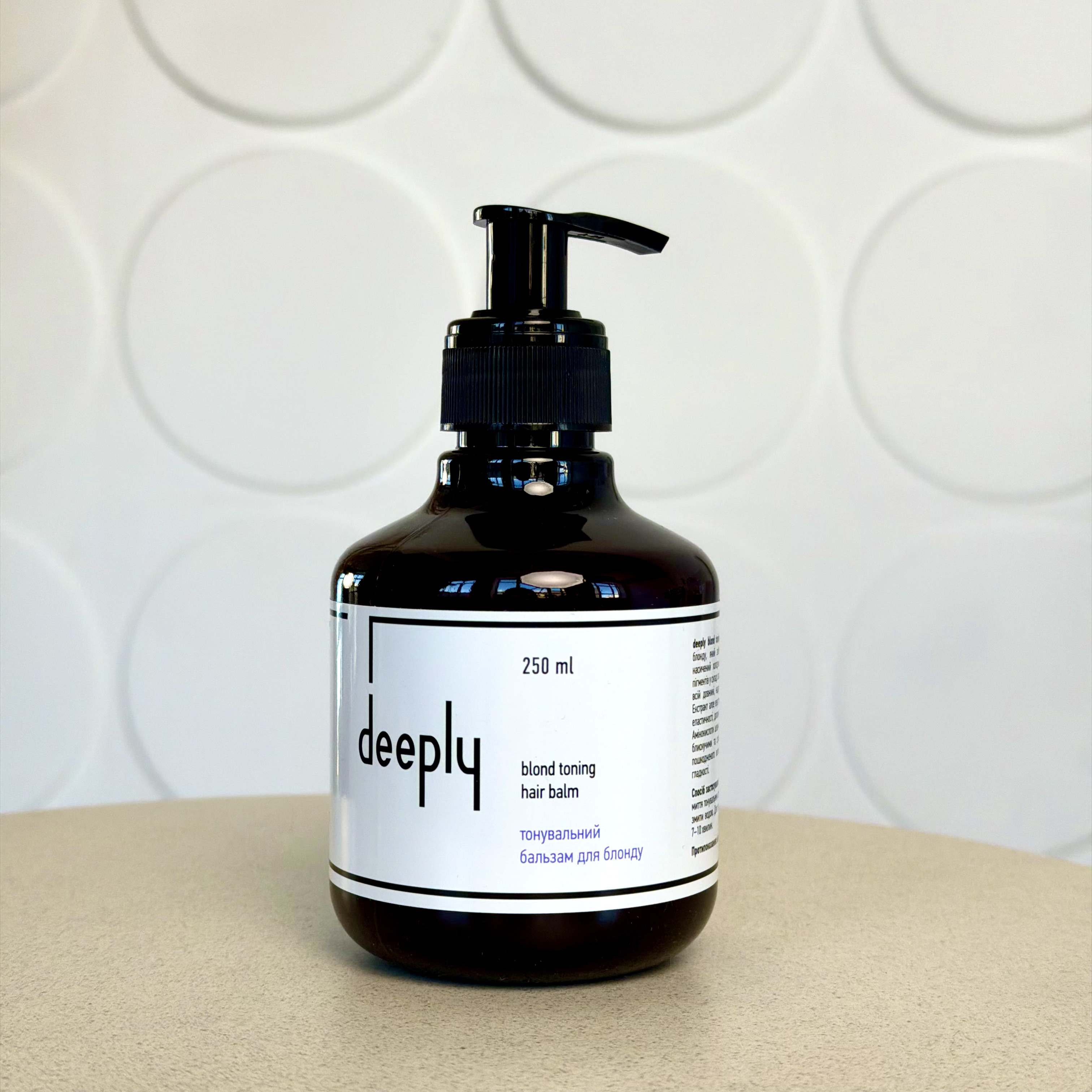
Purple shampoo or a mask does not remove yellow pigment from the hair. Its purpose is to optically correct unwanted warmth by depositing pigments from the opposite part of the colour spectrum. This is why such products are used to maintain cool blonde shades between colouring and toning treatments. Our store offers products containing purple or blue pigments designed to neutralise unwanted warm tones in bleached and blonde hair.
However, it is worth bearing in mind that pigments may show up more quickly and intensely on very light or porous hair. As a result, instead of a clean, cool blonde, the hair may develop a purple, greyish or uneven shade. Therefore, the intensity and frequency of toning care should be selected according to the condition of the hair, its porosity and the desired colour.
What should you do if your blonde hair has turned yellow after summer?
Restoring a beautiful shade does not necessarily begin with a new colouring treatment. First, you need to assess the condition of the hair, the nature of the unwanted warmth and your home care routine. The optimal sequence of steps may look as follows:
- determine whether the shade is actually yellow rather than orange, green or dull due to mineral build-up;
- if necessary, gently remove accumulated deposits if the hair has been exposed to hard water or water with a high mineral content. Chelating shampoos are excellent for this purpose, such as deeply Magnetic Chelating Shampoo;
- reintroduce moisturising and conditioning products into your hair care routine;
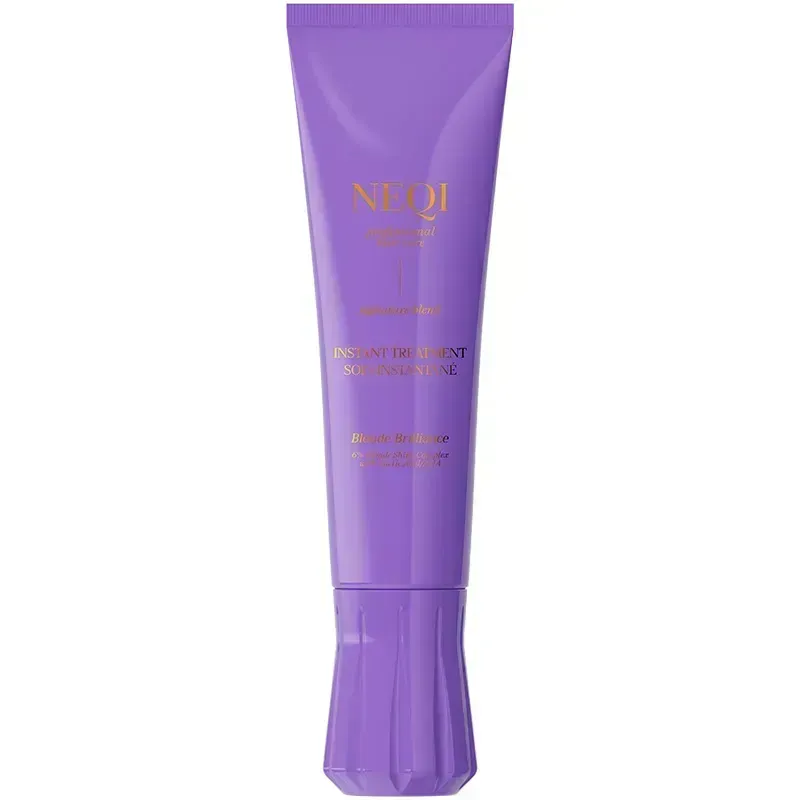
- use purple-pigmented toning products according to the instructions. In particular, a mask designed to neutralise yellow tones after summer may help: NEQI Treatment Treasure Blonde Brilliance;
- do not use pigmented shampoo every time you wash your hair unless necessary;
- protect the lengths from excessive sun exposure;
- reduce unnecessary heat styling;
- if the colour has changed significantly, consult a colourist for professional correction. Beforehand, you can use fillers to prepare the strands for colouring as part of a restorative treatment.
This approach makes it possible to address both colour and hair quality at the same time. This is important because yellow tones alone do not indicate that the hair needs to be bleached again.
How should you care for blonde hair after summer?



After the period of intense sun exposure, your home hair care routine should focus on several key tasks. Bleached hair needs cleansing, conditioning, protection and shade maintenance. The following principles should be taken into account in your basic hair care routine:
- the shampoo should cleanse the scalp and hair without unnecessarily drying out the lengths;
- conditioner or a mask helps make the surface of the strands smoother and easier to comb;
- toning products should be used periodically when there is a need to correct warm tones;
- leave-in care helps reduce mechanical stress during combing and styling;
- heat protection is necessary when using a hair dryer, curling iron or straightener;
- during prolonged sun exposure, it is advisable to provide additional physical protection for the hair by wearing a hat or reducing direct exposure to sunlight;
- after contact with seawater or swimming pool water, the hair should be rinsed with clean water.
Professional restorative products can be particularly beneficial for blonde hair after summer. They help restore the structure of the strands after exposure to ultraviolet radiation, water and salt, promote a more even colour and help prepare the strands for colouring or toning if needed. A good choice may be FAV.1 112 RESTORE MASK — an amino acid mask for caring for damaged, dry and weakened hair. The amino acid complex helps improve the condition of curls after colouring and regular heat exposure, making them more elastic, smooth and manageable. This amino acid mask for bleached hair softens the lengths, makes combing easier and gives the strands a well-groomed shine without making them feel overloaded. The product is particularly suitable for hair that is regularly coloured, blow-dried or heat-styled.
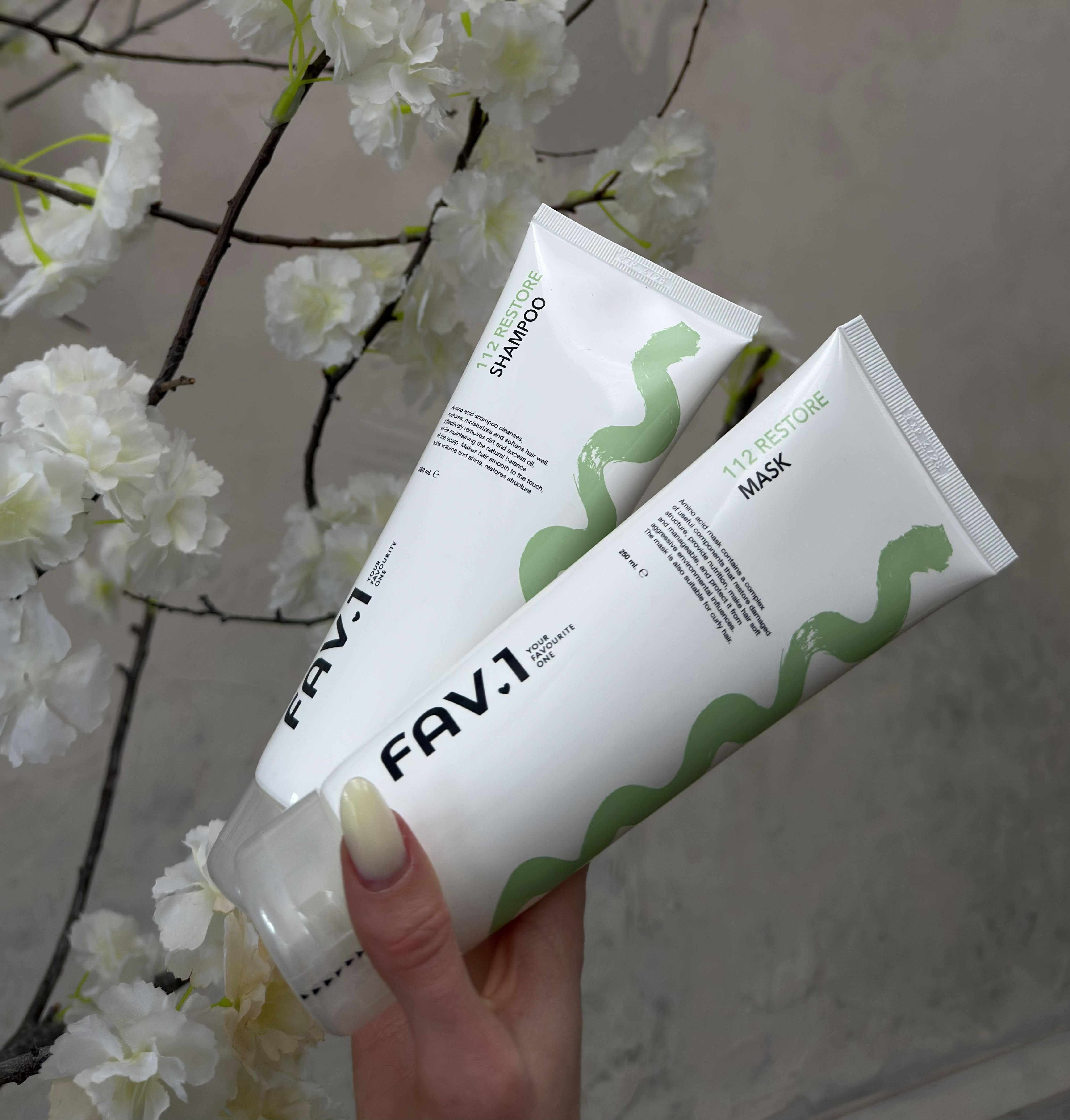
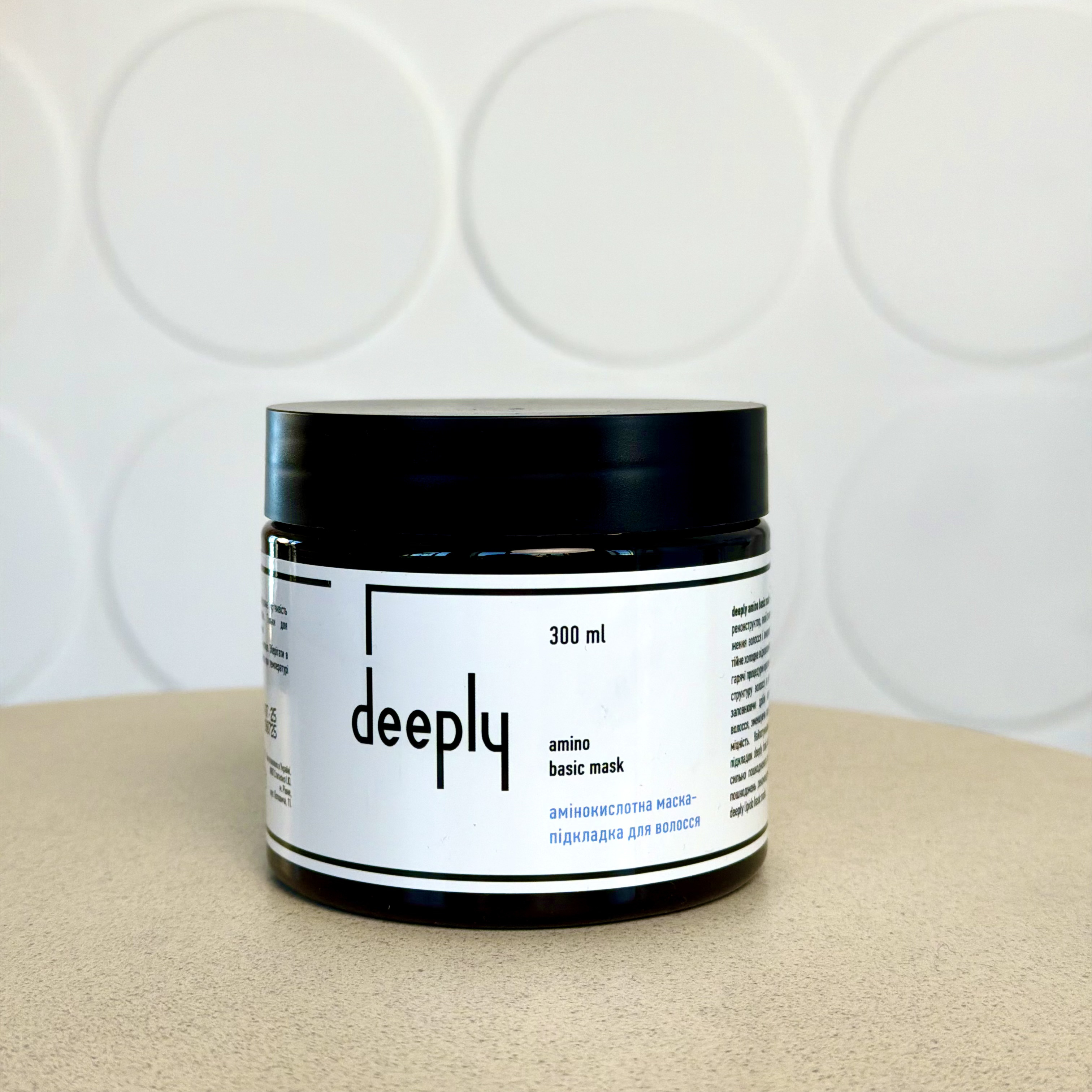
Another useful option may be deeply Amino Basic Mask — an amino acid base mask for treating damaged and porous hair. The product helps reduce the visible signs of damage, improve strand density and elasticity, and make the hair better prepared for subsequent care. The mask can be used as a standalone cold hair restoration treatment or as a preparatory step before hot treatments, including keratin straightening or hair botox. The base mask format is particularly convenient for professional use when the lengths need to be prepared before a treatment.
What should you avoid doing to yellowed blonde hair?
The desire to restore a cool shade as quickly as possible often leads to excessive use of toning products. However, bleached hair requires careful control rather than the maximum possible amount of pigment. There are several common mistakes that are best avoided:
- using purple shampoo every time you wash your hair when there is no need to do so;
- leaving a pigmented product on the hair significantly longer than recommended by the manufacturer;
- applying several different toning products at once;
- bleaching the lengths again simply because yellow tones have appeared;
- ignoring dryness and brittleness while focusing exclusively on colour;
- trying to neutralise every unwanted shade exclusively with purple pigment;
- using aggressive home remedies to remove yellow tones.
It is particularly important not to confuse colour correction with restoring blonde hair after exposure to the sea and sun. A pigmented product can change the appearance of the shade, but it cannot reverse the structural effects of bleaching and summer exposure.
Is fresh toning necessary after summer?
Not every blonde shade that has become warmer requires a full colouring treatment. If the hair is generally in good condition and the only problem is the loss of a cool undertone, a colourist can select a corrective toning treatment for blonde hair after the summer season.
The situation is different when the colour change is accompanied by severe porosity, brittleness, unevenness or mineral build-up. In this case, the condition of the hair and the cause of the shade change must be determined first.
You should not apply a lightening mixture to already bleached lengths on your own simply because ordinary yellow tones have appeared. Additional bleaching creates further chemical stress; it is not a colour-neutralising treatment.
How can you maintain cool blonde hair next summer?
The best way to deal with summer yellowing is not to wait until it becomes as noticeable as possible. Maintaining your hair care routine is much more sensible than trying to correct the colour radically at the end of the season. The following habits should be included in your summer hair care routine for blonde hair:
- do not leave your hair wet for a long time after swimming in a pool or the sea;
- rinse the strands with clean water after swimming;
- use suitable conditioning and leave-in care products;
- monitor how often you use purple products;
- apply heat protection when heat-styling your hair;
- reduce the amount of time your hair is exposed to direct sunlight whenever possible;
- trim split ends regularly as needed;
- monitor not only the colour but also the elasticity, smoothness and condition of the lengths.
Solar radiation is one of the factors involved in hair ageing: it affects the pigments, proteins and lipids in the hair fibre. Therefore, protection during summer is important not only for colour but also for the overall appearance of the strands. By the way, you can find more useful information on how to establish a home hair care routine in our article Professional Hair Care: 10 Brands Worth Having at Home.
The main rule for beautiful blonde hair after summer
Yellow tones after summer result from the interaction of several factors. The sun changes pigments and damages the hair, frequent washing accelerates the loss of toning pigments, and minerals in water can accumulate on the hair fibre and affect its properties. These processes are particularly noticeable in bleached hair.
Therefore, proper care for blonde hair should focus on three areas: maintaining the desired shade, preserving hair quality and protecting it from external factors. Purple and blue pigments help correct unwanted warmth, but they should not replace a complete hair care routine.
If your blonde hair has turned yellow after summer, do not rush to bleach it again. First, determine the nature of the colour change, assess the condition of the lengths and adjust your home care routine. This approach helps maintain a cool shade without unnecessary chemical stress.
The benefits of buying professional hair care products from KeratinPro
The online store KeratinPro specialises in professional hair care cosmetics and offers dedicated product categories for blonde hair, including anti-yellow shampoos and toning care products. Its range includes products for maintaining cool shades, moisturising, restoring and protecting the hair.
Shopping at an online store is convenient because products can be selected according to hair type, purpose and the desired result. This is particularly important for blonde hair: a toning product should be suitable not only for the colour but also for the condition of the bleached strands.
The online store KeratinPro delivers throughout the World and offers professional products for a systematic home hair care routine, including professional hair masks. This makes it possible to put together a complete routine for maintaining blonde hair, from cleansing and conditioning to shade correction and protection of the lengths.
You can also read other interesting articles on our website, including: